Know Your Weingarten Rights
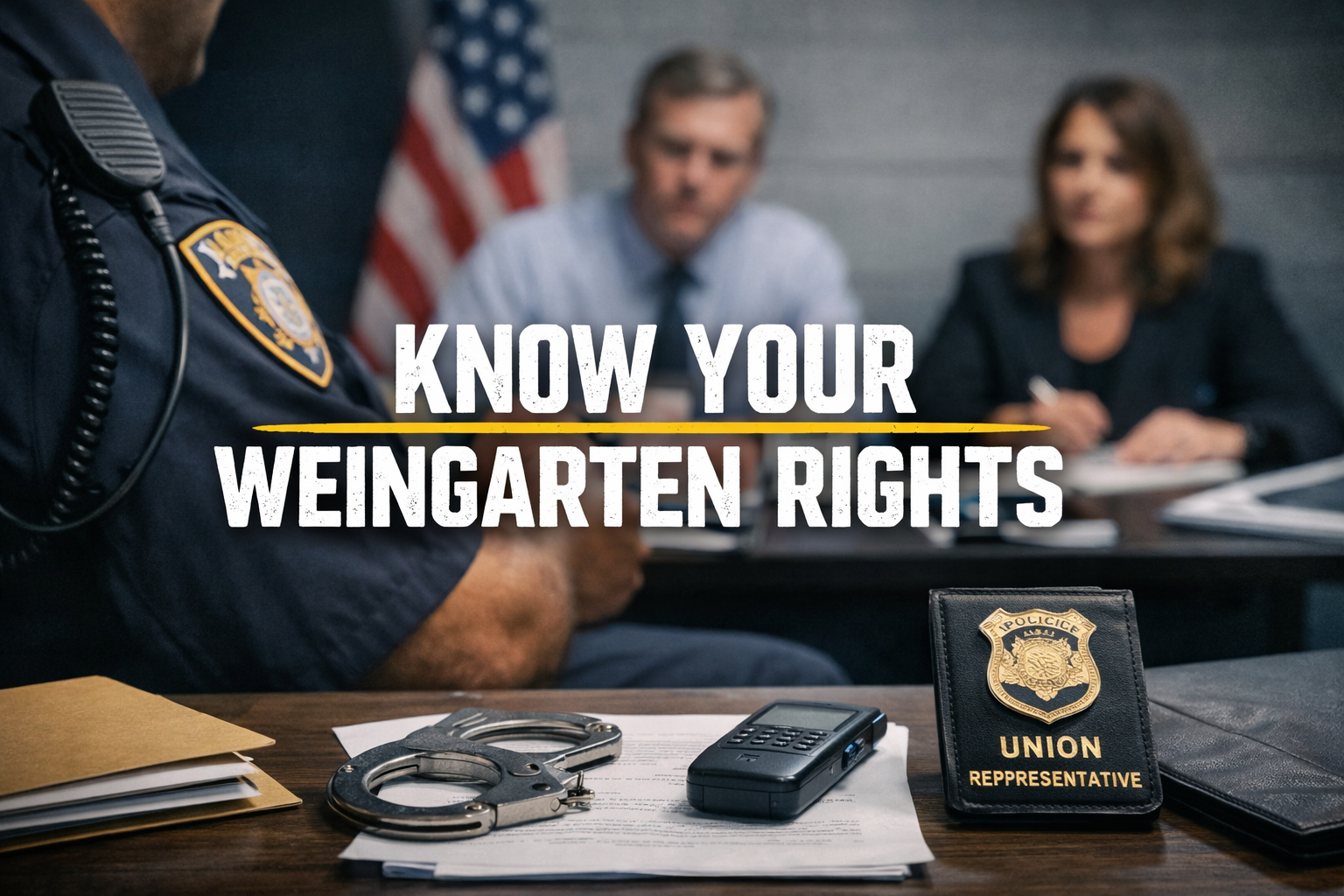
Not legal advice and not a substitute for counsel. This article is for general information purposes only. Department policy, your CBA, and state law vary. Know that administrative vs. criminal matters are handled differently. When in doubt, contact your union/association rep or an attorney.
Know before the door closes
Weingarten rights are workplace protections for union-represented employees under the National Labor Relations Act. They have existed for decades, yet too many members, especially newer ones, either do not know what these protections are or were never taught how to use them when it matters. Unfortunately, by the time the questions become serious, the door may already be closing.
The questioning does not always begin in a formal interview room. It may start with a casual interaction: “You’re not in trouble, I just need to clear something up.” That conversation might happen in a hallway, in a vehicle, in an office, or immediately after an incident. The setting may feel informal, but the consequences can be very real. If your answers could later be used against you, the interaction may already qualify as investigatory questioning. Written statements can present even greater risk, because once they are given, they create a permanent record that can be re-read, reinterpreted, and used long after the moment has passed.
This is exactly why Weingarten rights exist. They protect members when questioning becomes investigatory, and they reasonably believe it could lead to discipline. It doesn’t matter how the meeting is described or whether you’re told, “you’re not in trouble.” If you believe your answers could later be used against you, the protection may apply. But recognizing that moment is only the first step in activating the protection.
Investigatory meeting + questioning + reasonable belief of discipline = Weingarten rights
activation of weingarten rights
Weingarten protection is not automatic, and employers are not required to inform you of it. It doesn't activate on its own, and it does not apply retroactively once statements have already been made. You must clearly and affirmatively request representation by stating: “If this meeting could lead to discipline, I am requesting union representation.”
Members may be pressured by comments following the request, suggesting that asking for a representative will "look bad" or "slow things down." That pressure itself is a warning sign. Cooperation does not require self-incrimination, and exercising a protected right is not defiance. Though repeating the request is not required, you can calmly restate it and stop engaging in the substance of the questioning.
Once representation is requested, management's options become limited. Typically, they may pause the meeting and arrange for a union representative, end the interview entirely, or offer you a choice to continue without a representative. What they should not do is continue questioning you while denying representation or punish you for invoking the right. If either happens, document it immediately.
If management honors the request and agrees to provide representation, remember that the process cuts both ways. The representative must be made available within a reasonable time and cannot be used to unreasonably delay the interview.
When a Representative arrives
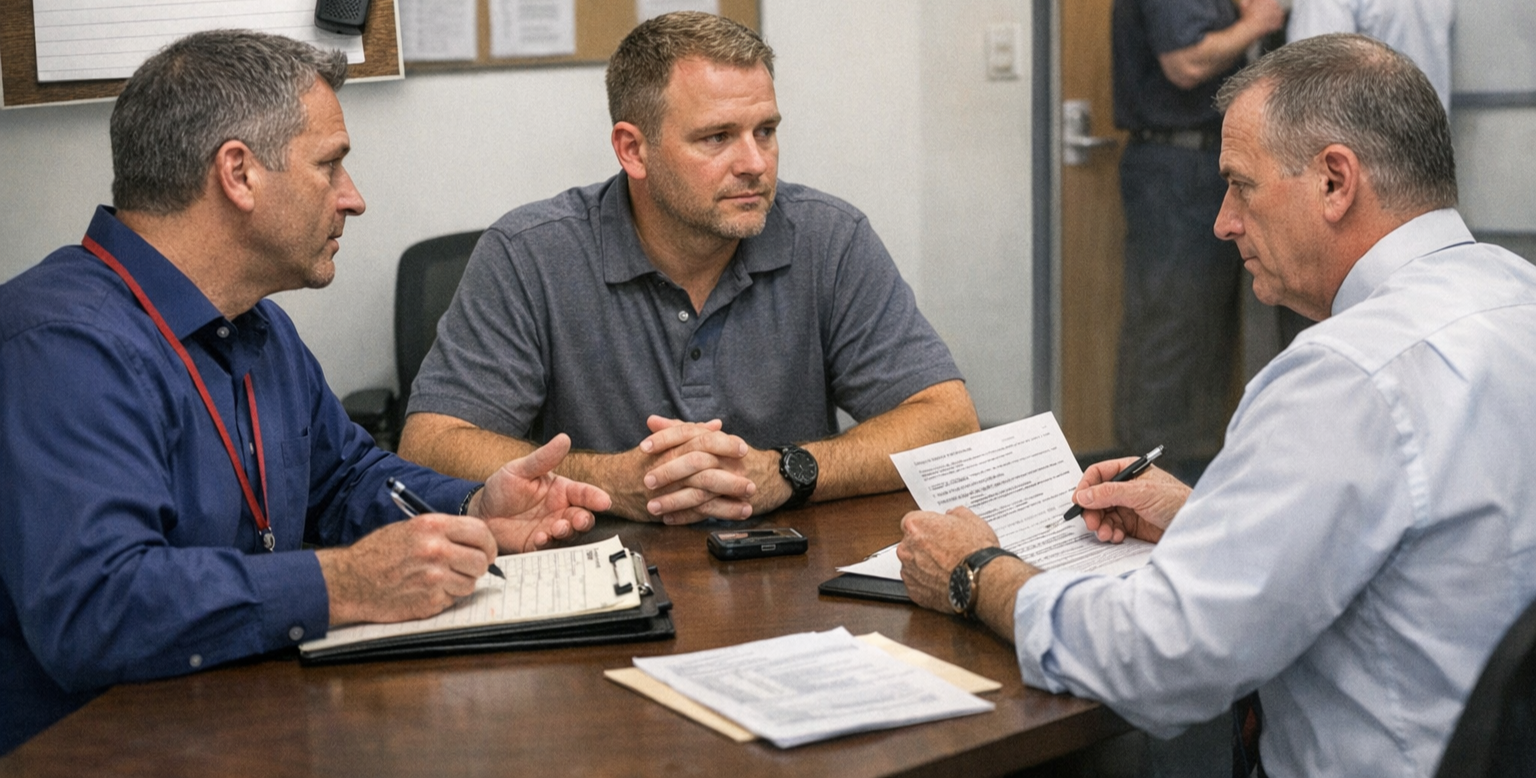
A representative's role in a Weingarten meeting is often misunderstood. One of the first things a representative should do is clarify what's happening, confirm the meeting's subject and purpose, and outline the general scope of the questioning. As the interview unfolds, if questioning becomes hostile, repetitive, or strays beyond the stated purpose, the representative can object, request clarification, or ask that the line of questioning stop. They can also request breaks to speak privately with the member, helping ensure the interview remains fair and within proper boundaries.
Equally important, the representative observes and documents. They pay attention to who is present, what is asked, how questions are framed, and how responses are treated. That record can become critical later if there's a dispute about what happened. Having a second set of eyes and ears in the room protects both the member and the union.
What a representative is not there to do is turn the interview into a courtroom, flip tables, or obstruct the process. While they do not have to remain silent, a representative cannot answer questions on the member's behalf, fabricate information, or encourage misleading statements. Their purpose is to remain professional and civil and promote a fair process, while protecting the members' rights and safeguarding the record that may follow the meeting.
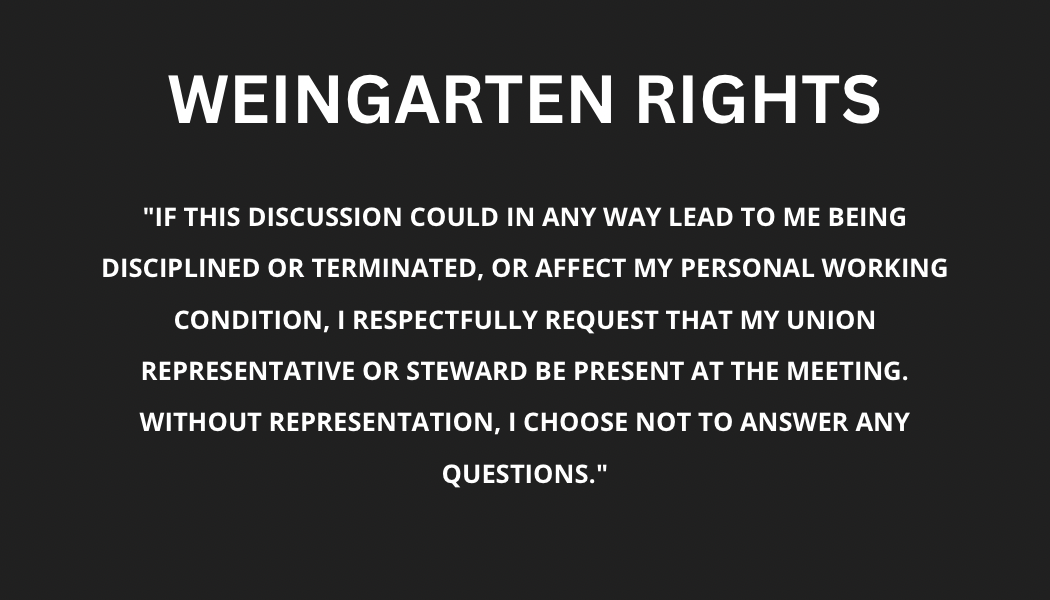
Say the words. Then stop talking.
Weingarten rights are not about avoiding accountability. They exist to ensure questioning is conducted properly and that members are not navigating high-stakes situations alone. Investigations are built on records, not intentions, and once a statement exists, it cannot be rewritten. Invoking representation early helps preserve fairness, protects credibility, and maintains the union’s ability to defend the member if needed.
Below are a few quick reference guides for both members and representatives to keep in mind.
A guide for members
When it applies: Investigatory meeting + you reasonably believe it could lead to discipline.
You must invoke it: Representation is not automatic; you must clearly request it.
Then stop talking: Once invoked, don't answer substantive questions until the rep is present.
Management's options after the request
Pause/delay questioning and arrange for a representative.
End the interview.
Offer you a choice to continue without a representative.
A Guide for Representatives
Permissible actions:
Clarify the purpose/scope of the interview and any confusing questions
Advise the member and help them stay on track
Request breaks to consult privately
Object to hostile, repetitive, or out-of-scope questioning / improper tactics
Help ensure the record is accurate
Limitations:
Don't obstruct or try to take over the interview
Don't answer for the member
Don't fabricate information or encourage misleading statements
Don't coach the member to lie or intentionally derail the process
Remember: if boundaries aren't respected, you can be removed
using the dutywire app
Create a folder for CBA / Union Activity
Save documents related to Weingarten rights, representation, and related resources
Add notes to each upload, and log key dates/events in My Calendar
Important: Be mindful of department policy, your CBA, confidentiality rules, and applicable laws when sharing, saving, or uploading documents. When in doubt, ask your union rep before uploading or distributing sensitive material.

Additional information and references
NLRB – Weingarten Rights: https://www.nlrb.gov/about-nlrb/rights-we-protect/your-rights/weingarten-rights
NLRB v. J. Weingarten, Inc., 420 U.S. 251 (1975)