Body cam myths vs reality
Author’s Note / Disclaimer
This article is not written to defend misconduct or dismiss accountability. When police actions are wrong, they should be examined and addressed fully. The purpose here is specific: to explain what body-worn camera footage can and cannot show, and why video alone is an incomplete measure of human perception and decision-making under stress. Understanding these limits is essential for fair analysis, responsible leadership, and meaningful accountability.
What video can’t tell you, even when it looks definitive
Body-worn cameras are now a permanent part of modern policing. They were adopted to increase transparency, improve accountability, and preserve an objective record of encounters. In many ways, they’ve delivered. By clarifying disputes, exposing misconduct, and protecting both civilians and officers from false claims.
However, a problem has grown alongside those benefits: the belief that video equates to the full truth.
Increasingly, footage is treated not as evidence but as a final verdict and an all-knowing account of what happened, what an officer saw, and what an officer intended. That assumption is wrong. And for leaders, agencies, and unions, it has real consequences.
The Central Myth: “The camera shows what the officer saw.”
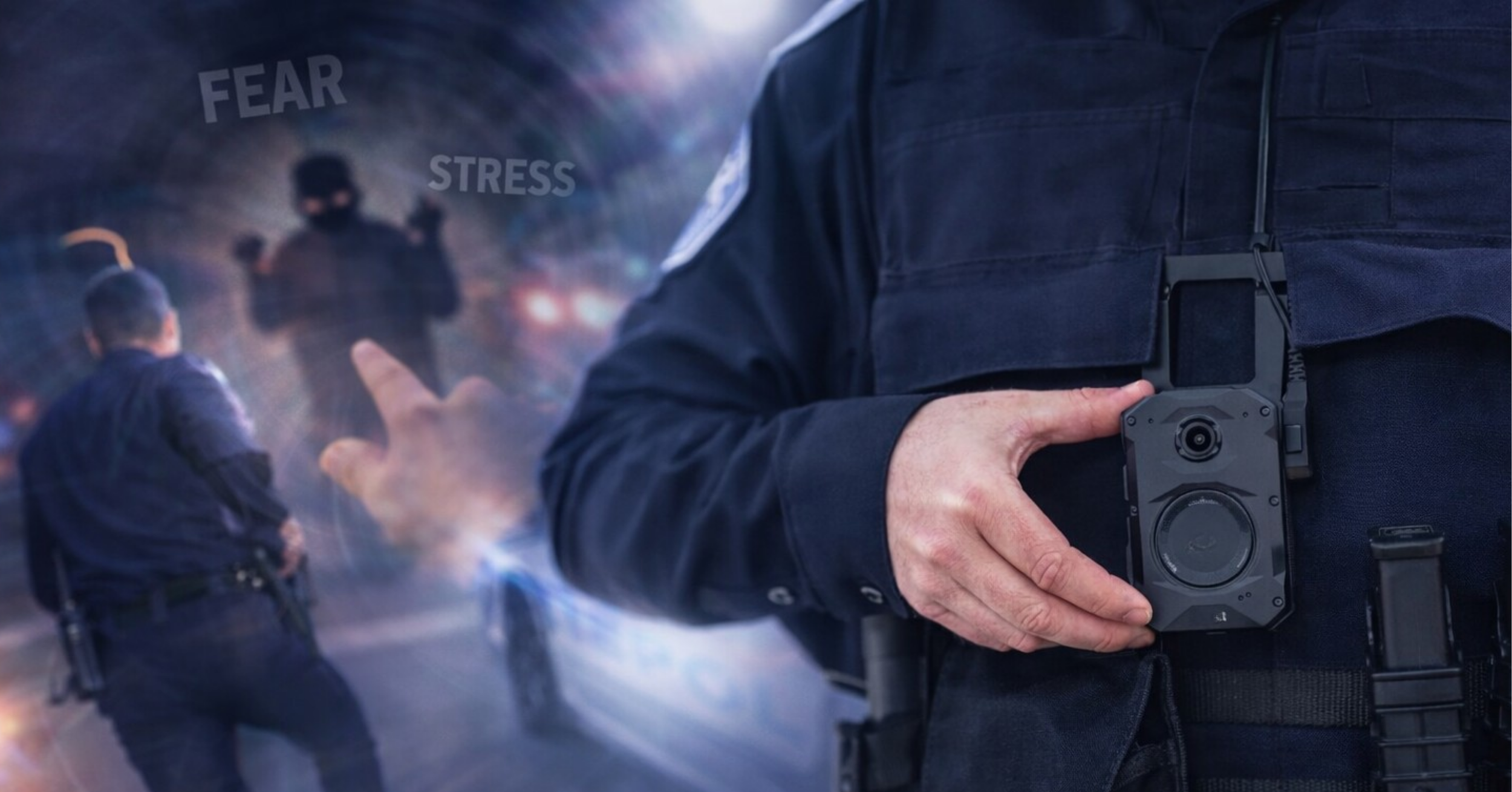
A body-worn camera records what the lens sees, nothing more. It doesn’t scan a scene, prioritize threats, or refocus the way human vision does. It also can’t show where an officer’s eyes were actually fixed, how stress narrowed attention, or what felt like an immediate threat in real time.
That doesn’t mean video is useless. Accountability matters, and footage is a pivotal piece of an investigation. The problem is treating it as a perfect substitute for human perception. Especially when conclusions get locked in before interviews, scene analysis, and policy review even begin.
Human perception is selective and dynamic. Under stress, attention narrows. Depth and distance can look different through a wide-angle lens. Motion can feel faster in the moment than it appears on replay. Lighting, blur, and compression can hide details that mattered at the time.
And there’s one final gap video can’t bridge: the human experience. A camera will never feel fear or uncertainty. It will never carry the weight of a person who has lived through trauma or the quiet thought many officers have in those moments: “I might not make it home.”
The camera is a machine. Officers are not.
The camera captures an image. The officer experiences the situation. And that difference is exactly why video alone can’t fully reproduce the realities of human performance under pressure, especially for a video verdict watching calmly, safely, and repeatedly from a couch behind a screen.
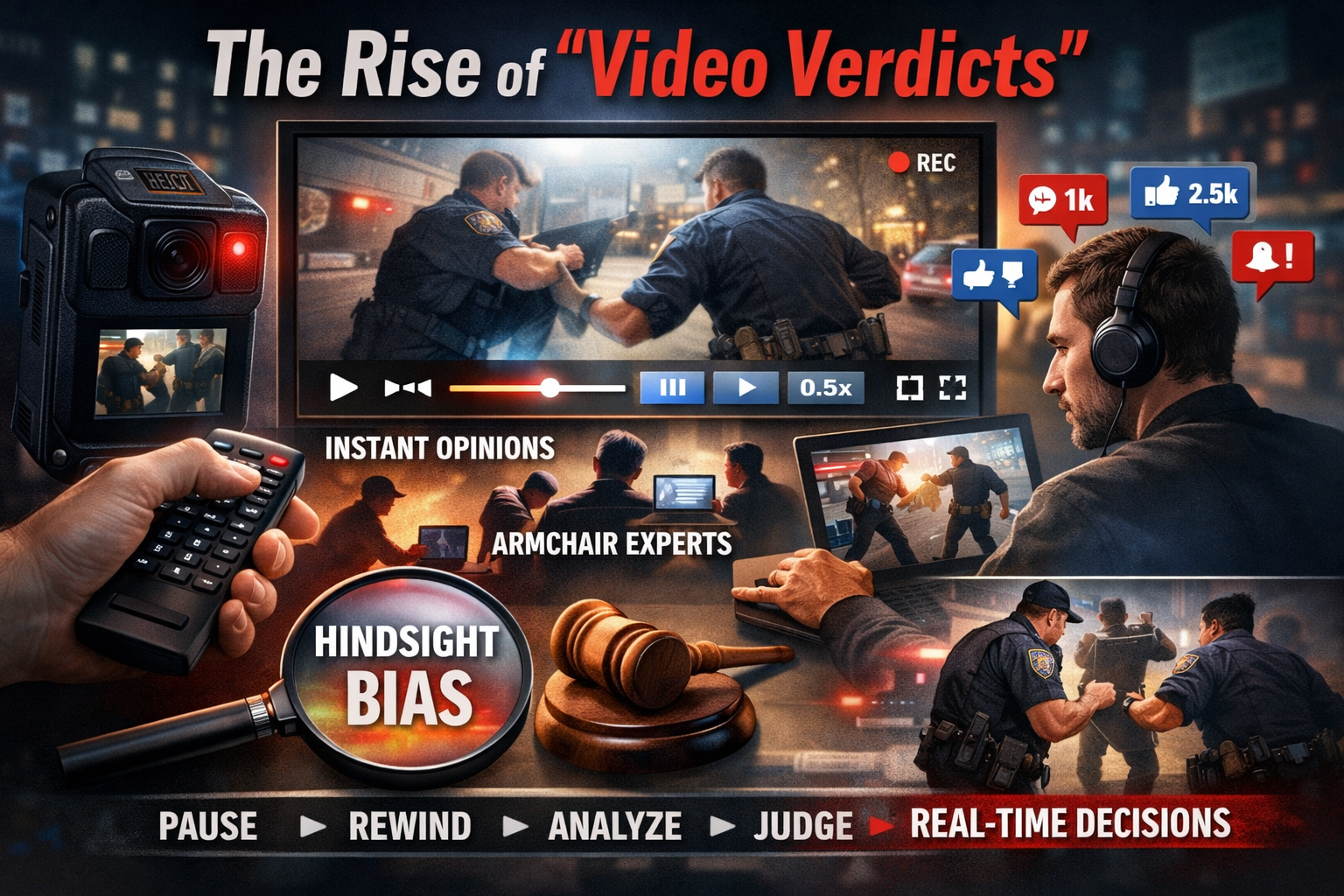
One of the most damaging side effects of body cameras isn’t what they record; it’s how quickly conclusions are formed. Short clips circulate within minutes. Public opinion hardens before facts are gathered. Administrators feel pressure to act immediately. Commentary fills the gaps with certainty, not context.
As access to information has exploded, so has the number of self-proclaimed “experts” who build credibility by binge-watching true-crime content, dissecting selectively edited clips, and reviewing incidents from behind a screen with none of the pressure or consequences attached.
The problem isn’t curiosity, it’s certainty. Confidence built on one-sided footage and hindsight analysis now passes for expertise, even when it ignores policy, training, timing, and human stress response.
Hindsight is powerful. If real life came with a video scrub bar, most tragedies wouldn’t unfold the way they do. You’d rewind before a car drifts over the line. You’d pause at the green light for an extra second. You’d slow time the moment a child bolts toward a pool. You’d undo the decision or comment you can’t take back.
But that’s not reality, because real life doesn’t come with playback controls.
Officers don’t get a pause button when a hand disappears into a waistband. They don’t get to rewind a half-second to confirm what an object was. They don’t get to slow down a dangerous scene to separate threats, manage bystanders, and choose the cleanest option.
They get one real-time decision under uncertainty, then everyone else gets unlimited replays in perfect safety. That’s the difference between reality and a video verdict.
A Leadership Responsibility
For union leaders and agency leadership alike, the responsibility is the same: insist on accountability and accuracy.
That means resisting pressure to treat video as the final truth, defending due process, and evaluating incidents with full context, training, timing, policy, and human performance. Not just playback clarity.
Defending the process is not the same as defending misconduct. It is defending fairness.
Conclusion
Body-worn cameras have improved policing in real and measurable ways. But they are not truth machines.
They don’t perceive a threat.
They don’t feel fear.
They don’t make decisions.
Human beings do.
If accountability is the goal, video must be treated as evidence, not a verdict. And if leadership is serious about impartiality, context must matter as much as clarity.