Is this road closed?
What Officers Wish Civilians Understood at Obvious Roadblocks
Information HQ | DutyWire
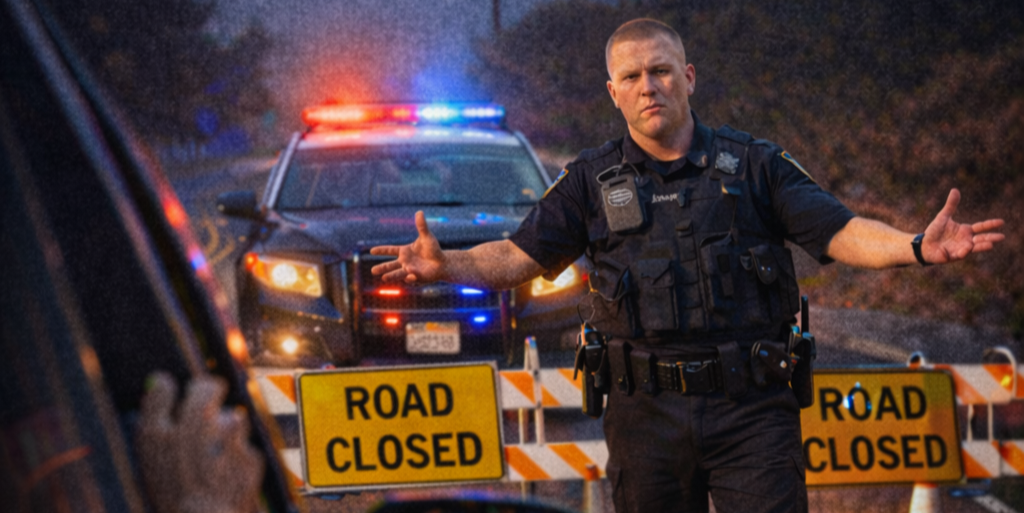
If It Looks Like a Road Closure, It Probably Is.
From the outside, it seems simple:
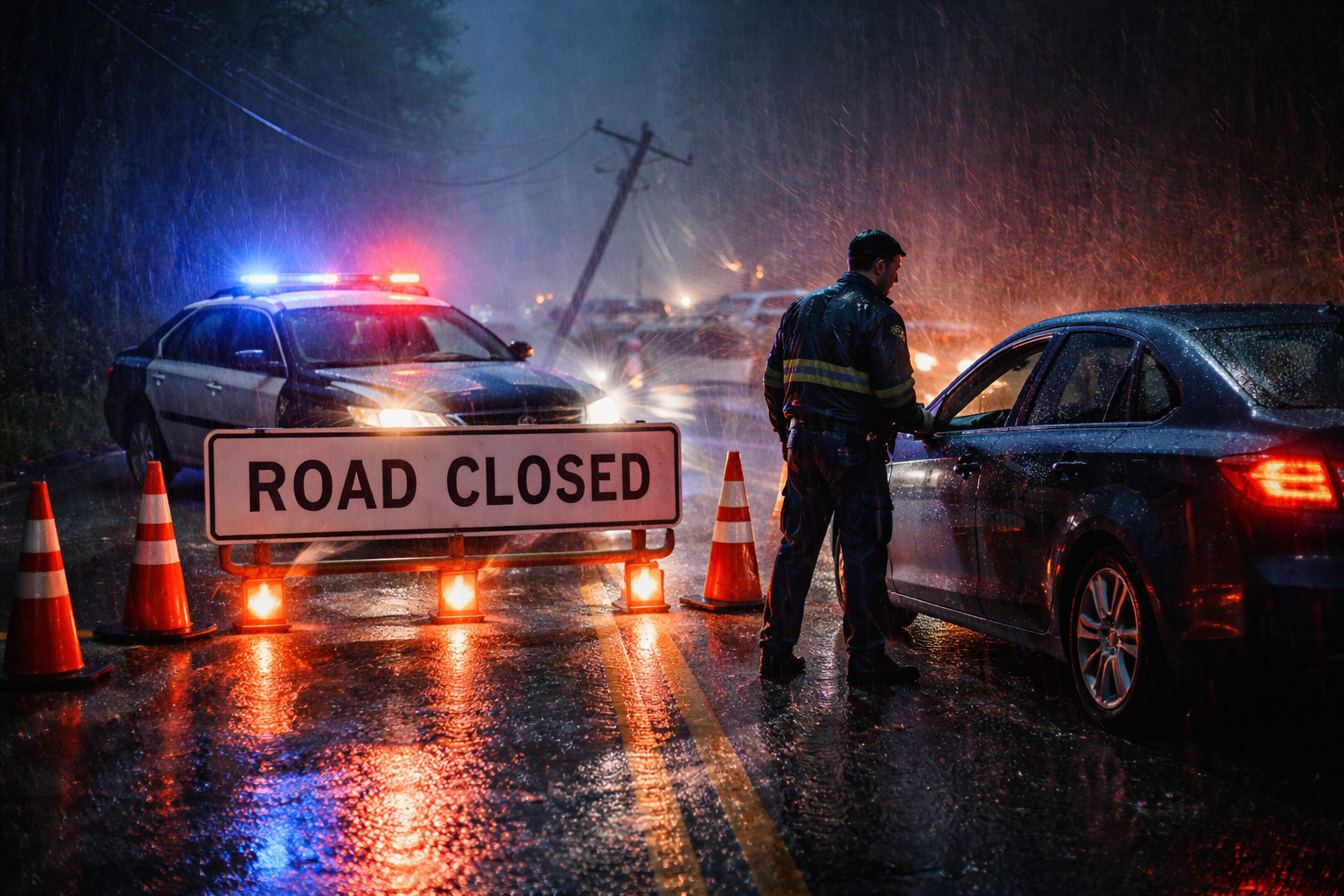
A patrol car is parked across the road, lights flashing. Cones are stacked in an impassable line, flares wrapped around them, and a barricade that couldn’t be clearer if it came with subtitles: ROAD CLOSED. Off to the side, a utility pole and live wires are down where gravity finally won. Debris blocks what used to be a road. Wind gusting at 30 miles an hour and rain thats pouring down sideways.
And still, slowly and confidently, a car rolls up. The window comes down, not all the way. Just enough to talk, so they don’t get wet.
Standing there, soaked, tired, and managing the scene, the officer hears the question every cop and first responder knows and loves:
“…is the road closed?”
This happens not once. Not twice. Over and over throughout the closure. And it’s rarely because the driver is rude or reckless. It’s because, for reasons known only to the human brain, people sometimes need mild inconvenience to feel that reality is objective. The irony is that the more dramatic the scene looks, the more confidently the question is asked. If the road is kind of blocked, drivers hesitate. If it seems like the world is on fire, they roll right up anyway.
Promotion to GPS
Once the road is confirmed closed, the follow-up usually lands immediately:
“So… how do I get around this?”
Suddenly, the officer is expected to become a personal GPS while standing in the rain, darkness, heat, or cold, managing a live hazard, and protecting the scene.
Here’s the part that doesn’t get said out loud:
You have a phone.
That phone knows exactly where you are.
That phone can reroute you in seconds.
So, is this question really about directions… or is it curiosity about what happened?
Either way, the officer, hours into a critical incident, is now being asked to provide a detour through a two-inch gap in a window, while juggling responsibilities that actually keep people alive.
To be clear: this isn’t about refusing to help. Cops and first responders help people find their way every day. Ask during a typical interaction, stop by Headquarters, flag one down when things are calm, most of the time you’ll get help without hesitation, and you should.
But during a critical incident, that’s not the moment. The officer behind that barricade is responsible for who enters, who leaves, and whether the situation stays contained.
Preventing secondary incidents, keeping unauthorized people out, protecting the public, and controlling hazards come first.
This is where things get misunderstood.
Sometimes the response comes out with frustration. Sometimes it’s a flat, unemotional “Yes.” And occasionally, that tone becomes the complaint: blunt, cold, rude.
What most people don’t see is what came before that five-second interaction.
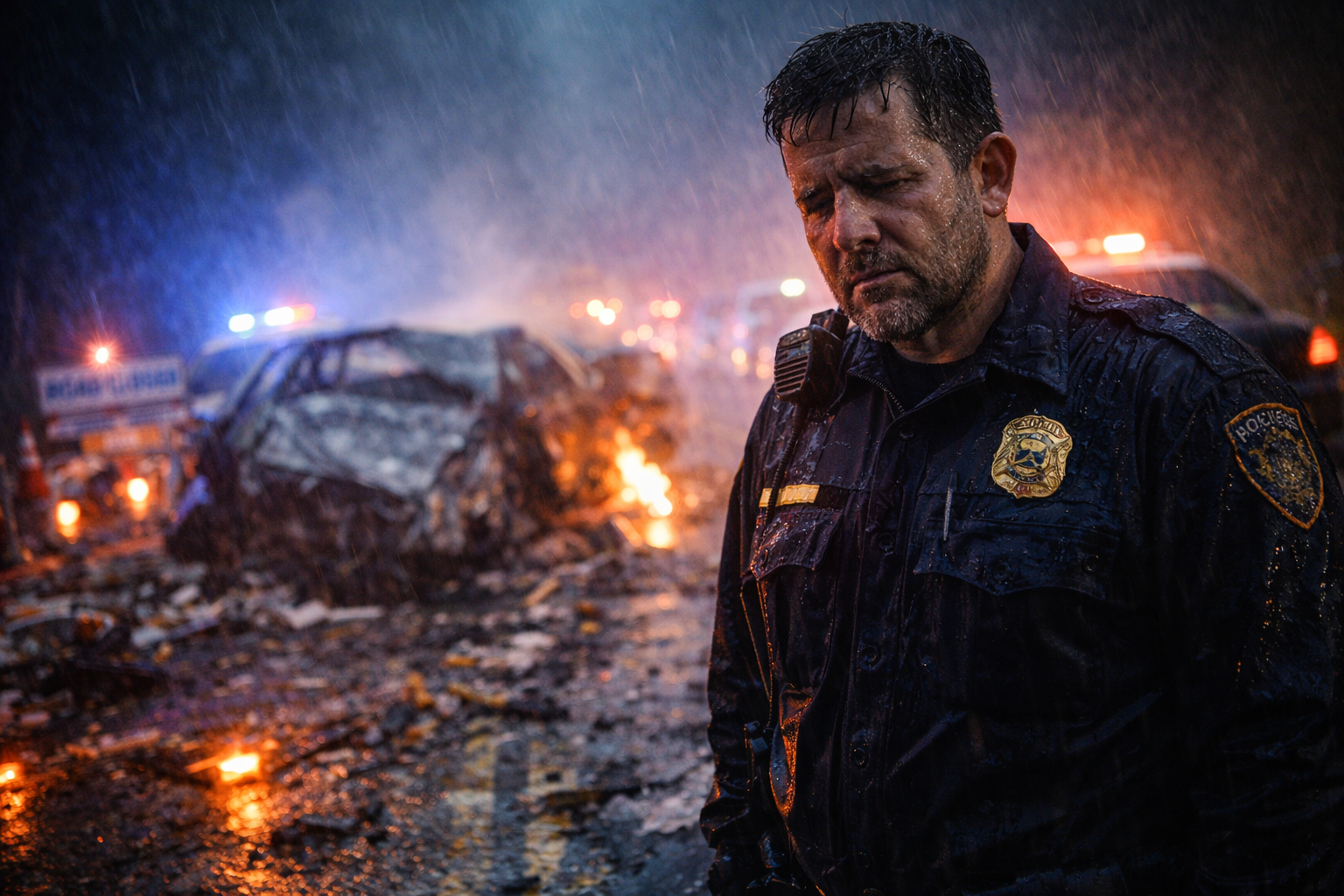
The mangled vehicle, just out of view. The smell of burning fluids or something worse. Having to step through a ground littered with pieces of what used to be someone’s life. Still there hours later, they’re directing traffic, keeping people back, securing hazards, and repeating the obvious: yes, the road is closed.
Officers aren’t out there to inconvenience you. They’re out there to protect you, sometimes from yourself.
So, when the same obvious question gets asked again and again. One that the lights, cones, tape, barricades, and chaos already answered. It tests the patience of even the most professional person.
What Officers Wish Civilians Knew
When you roll up on an obvious roadblock, a few simple choices help more than you realize:
If it looks closed, assume it’s closed.
Cones and barricades aren’t decorations.
Use your GPS (safely) and let it do what it’s built to do.
And remember the difference in scale: you’re dealing with a detour, someone in that scene may be dealing with a life that just changed forever.
A Little Perspective Goes a Long Way
Getting turned around is frustrating. Being late is stressful. No one likes changing plans.
But for the officer at that barricade, the day didn’t go according to plan either. They didn’t wake up hoping to block traffic. They didn’t choose the weather, the hazard, or the incident. They’re there because something went wrong, and it needs to stay controlled.
So, the next time you pull up to flashing lights, cones, and a scene that clearly says not today, take a breath.
Yes, the road is closed.
This isn’t meant to discourage people from asking questions when they genuinely need help. It’s meant to add perspective. At the end of the day, helping is part of the job, especially when someone is unsure, stressed, or just trying to get home safely.
But helping each other is what makes communities work, and part of that is meeting each other halfway. If deep down you already know the answer to the question you’re about to ask, and you can see the scene is active, tense, or hazardous, and your gut tells you this probably isn’t the moment to start a conversation…
Go with that instinct. Find a detour. Use your GPS. Give the officer space to manage the scene.
And if you genuinely do need help? Always ask, most officers would rather answer a vital question ten times over than miss the one time someone needed it.