BURNOUT ISN’T JUST FATIGUE: How It Impacts Decision-Making and Reveals Organizational Failure

Most people recognize the common signs of employee burnout. They’ve seen them in mandatory wellness seminars, check-the-box trainings, or workplace pamphlets: fatigue, lack of focus, loss of motivation, and increased time off.
But burnout is more than a checklist of symptoms. At its core, it is a noticeable decline in engagement, cognitive performance, and most critically, decision-making under pressure.
In any workplace, that decline affects morale and productivity. In professions like policing and other first-responder roles, it can influence decisions with immediate and lasting consequences.
How Burnout Develops
Unlike acute conditions such as post-traumatic stress, burnout rarely stems from a single event. It develops gradually through repeated exposure to stress, sustained pressure, limited recovery time, and a mental load that never fully shuts off.
For many, the stress does not end when the shift is over. It follows them home, where personal responsibilities take over, and recovery remains impossible. The constant transition between high-stress environments and personal demands leaves little room to decompress.
These causes are well-documented and widely discussed in those seminars, trainings, and wellness pamphlets. Yet one critical contributor is often overlooked.
Internal Resistance and Operational Stagnation
Burnout is often seen as mainly caused by external job stressors, but it can also be worsened and sometimes even created by the work environment.
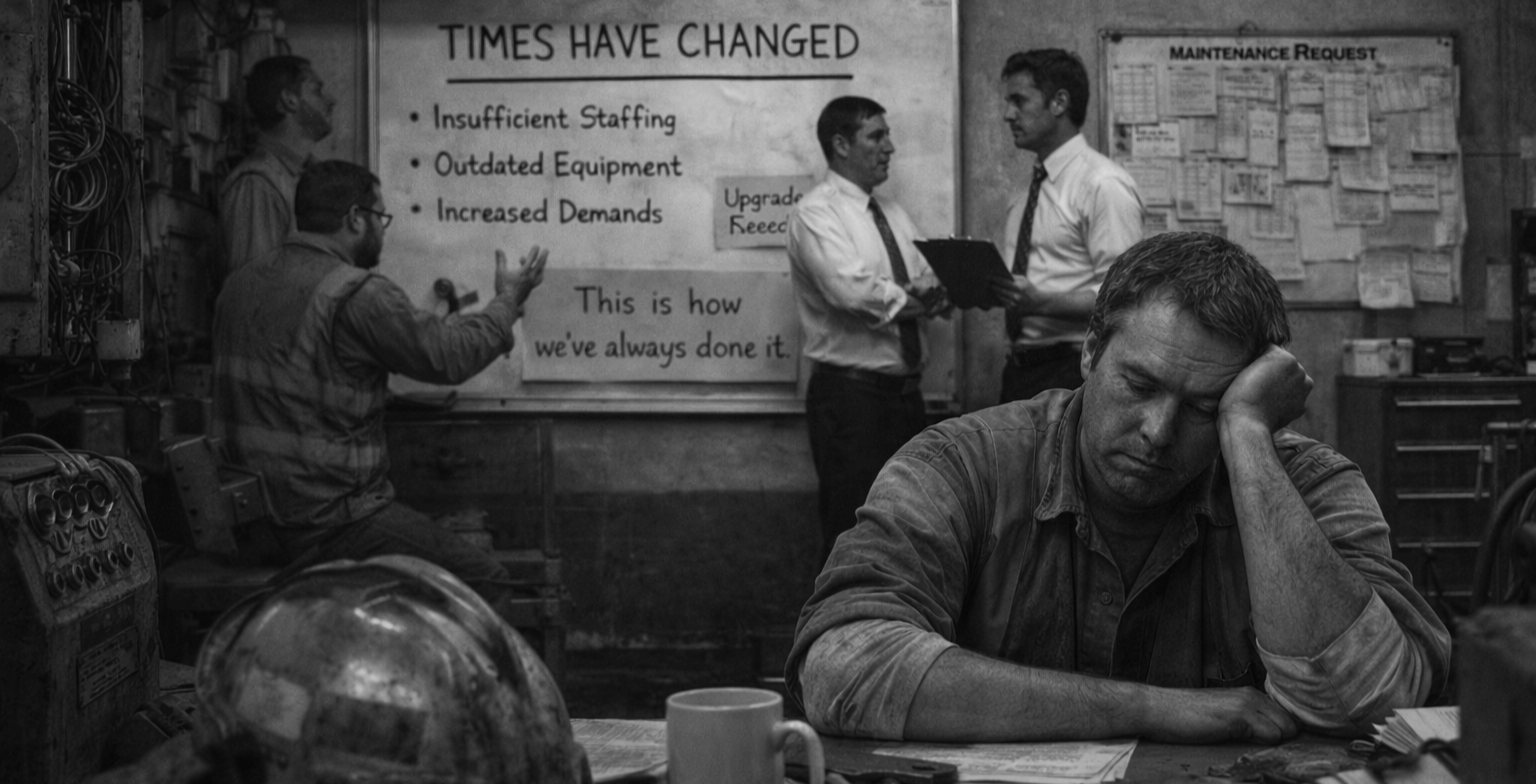
A clear and often overlooked pattern emerges when employees are tasked with managing evolving demands and increased responsibilities, yet their working conditions remain unchanged and have not kept pace. This stagnation often lays the groundwork for burnout.
Sometimes, it stems from a deliberate refusal to modernize or make necessary changes, fueled by one of the most damaging mindsets an organization can adopt: “This is how we’ve always done it.”
Other times, it signals a widening disconnect between leadership and the people doing the work. When expectations are set without a clear understanding of day-to-day realities, critical needs go unaddressed, and burnout begins to take root.
That strain deepens when employees try to improve operations by raising concerns that could help prevent it from worsening internally. Instead of support, they are often met with indifference, delays, or resistance. At that point, burnout is no longer caused solely by the work itself. It is intensified by the surrounding system, and once it takes hold, the effects can spread quickly across the workplace.
When these organizational contributors are ignored, employees begin to see effort as pointless. Initiative no longer feels valued; it feels punished. Motivation shifts from a driver of professional growth to a source of stress.
From Engagement to Disengagement
This is where committed employees begin to disengage, not because they stopped caring, but because they cared for too long in an environment that refused to listen.
In many professions, external stress is part of the job. What accelerates burnout is the realization that preventable internal problems will continue to be ignored. Effort becomes obligation, initiative gives way to silence, and engagement turns into withdrawal.
Once that shift occurs, the damage spreads quickly. Productivity declines, passivity becomes normalized, and ideas shaped by experience are dismissed rather than acted on.
Why It Matters: The Decision-Making Impact
Burnout does not just drain energy; it degrades judgment.
As cognitive fatigue builds, attention narrows, reaction time slows, risk assessment becomes less reliable, and problem-solving declines. The result is a compounding cycle: fatigue lowers performance, the decline in performance increases stress, and this rising stress further undermines decision-making and motivation.
In high-risk professions, that decline can affect safety, teamwork, and outcomes. In any organization, it leads to errors, inefficiency, and falling morale. Burnout is not just an emotional strain. It is a direct threat to sound decision-making.
When concerns are dismissed, improvements are delayed, and preventable problems are allowed to continue, burnout stops being just an employee issue. It becomes organizational decline.
Final Thought
Burnout is both a cause of and a result of poor decision-making. Ignoring this connection only prolongs and deepens the problem. It is not solely an employee issue but a reflection of organizational choices. It is something that organizations either reduce or reinforce through their decisions.
Learning how to cope with burnout matters, but preventing it must come first. That means accepting past or present failures, stagnant practices, and operational conditions in any organization that allow burnout to take hold.
Recognizing these factors early and fostering strong communication and collaboration can significantly reduce the chances of burnout taking hold.
But organizations that refuse to adapt will remain trapped in a cycle of responding only after it has already set in, while continuing to feed the very conditions that create it.